

Robust Extraction of Metabolites, Lipids, and Proteins from Tissues Using the Covaris R230
Advancing Multi-Organ, Multiomic Extraction Workflows with the Covaris R230 Focused Ultrasonicator
Philip Lorenzi, PhD
Professor (Research), Microbiome Program at City of Hope
ASMS 2026
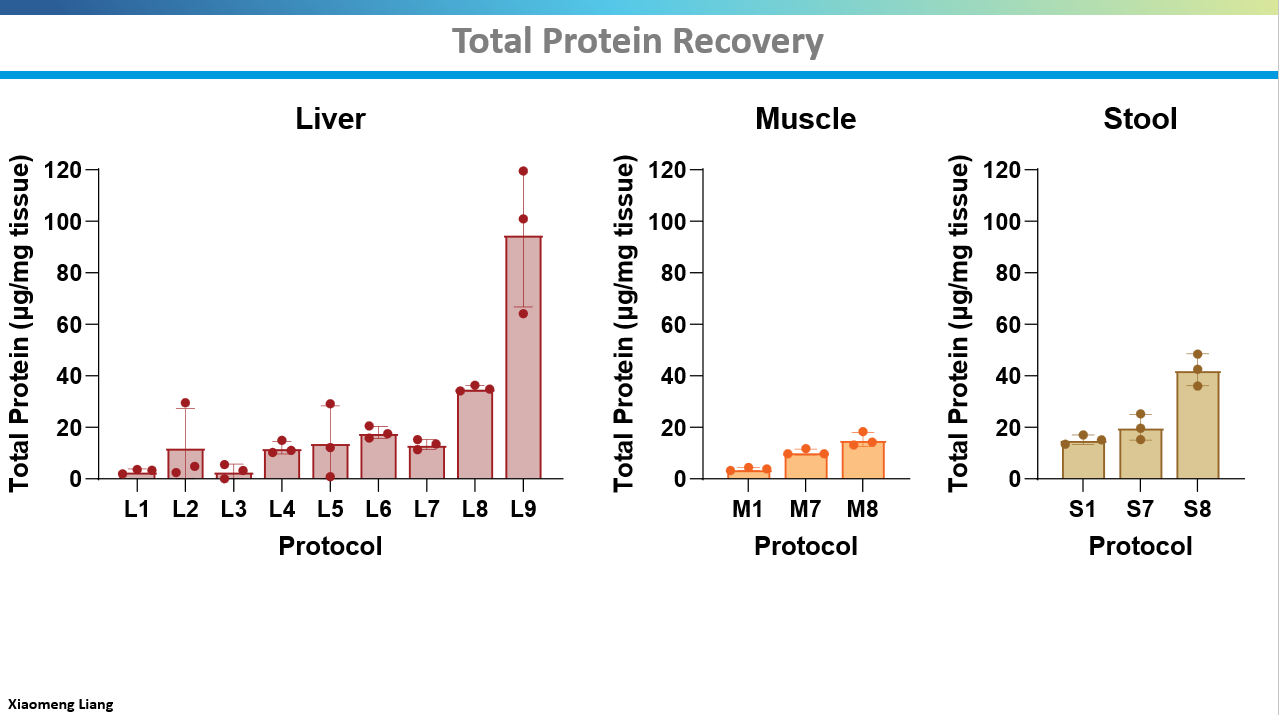
Efforts are underway to develop robust multiomic platforms capable of constructing a systems-level biochemical picture of both host and microbiome compartments. Utilizing the Covaris R230 focused-ultrasonicator, researchers at City of Hope designed a single-sample multiomic tissue extraction workflow to sequentially recover metabolites, lipids, and proteins from complex tissues. While metabolite recovery remains highly consistent across various workflows, optimal lipid extraction requires nonpolar solvents, and current data suggests protein recovery is highest when utilizing a dedicated, single-omic extraction approach. The high-throughput capability of the R230 system actively enables large-scale, multi-organ aging and dietary studies in mouse models. The next step will be proteome profiling by analyzing on a high resolution accurate mass spectrometer.
A Multiomic Tissue Extraction Workflow Built on a Robust Workflow with R230
The R230-based workflow enables the sequential extraction of metabolites, lipids, and proteins from a single tissue sample. This streamlined and comprehensive workflow supports high-throughput processing of up to 96 samples simultaneously. Furthermore, the R230 is compatible with downstream tools, including Agilent Captiva EMR lipid plates and Agilent LC-QTOF analytical instruments. Ultimately, these multi-organ, multiomic data provide critical insights into biological research, such as the discovery of microbiome-mediated signaling mechanisms.
The Challenge of Systems-Level Biochemical Profiling
Constructing a complete biochemical picture of a biological system requires analyzing DNA, RNA, proteins, metabolites, and lipids across both host and microbiome compartments. To optimize sample cleanup and sequential extraction of critical and key analytes, researchers utilized samples from three complex sources: mouse liver, mouse skeletal muscle (highly fibrous), and human stool (containing difficult-to-process microbial cell walls).
Sequential Multiomics from Tissues: Methodology and Solvent Strategy
The multiomic workflow relies on precise, sequential processing to maximize analyte recovery from a single sample. First, tissues are cryopulverized and placed into pre-weighed microTUBE® 130s to obtain accurate tissue weights. Extraction solvents are then added, and the samples are processed on the R230 ultrasonicator. Following this, the supernatant is isolated via centrifugation to capture the metabolite fraction. Ethanol-based solvents are subsequently added to the same tube, run through the procedure, and isolated to capture the lipid fraction. Urea-based buffers are introduced last to extract the protein fraction. Finally, samples are cleaned using Agilent Captiva enhanced matrix removal (EMR) lipid plates, dried under nitrogen, and analyzed on an Agilent Revitant LC-QTOF with a 1290-infinity-3 Bio-LC. Trifluoroethanol (TFE) is utilized for extraction.
Key Findings by Omics Fraction
Yields were found to be comparable across the tested workflows for metabolites, successfully producing approximately 800 to 900 high-confidence analytes from the liver tissue. Lipid extraction, however, was found to vary with polarity of the extraction solvent. Nonpolar, ethanol-based solvents are preferred for optimal lipid yield, allowing the analysis to successfully annotate 495 lipids in liver, 428 in muscle, and 157 in human stool. Finally, while protein recovery efficiency was optimal from a single-omic workflow, it was significantly impacted for samples that has already undergone metabolite and lipid extraction. Hence, concurrent extraction of proteins, metabolites, and lipids require further optimization.
Enabling Large-Scale, High-Throughput Research
The capacity to process 96 samples at a time on the R230 is vital for large-scale studies. This high-throughput workflow is currently being used to study 69 HET3 strain mice, a gold-standard model for human aging.
The study evaluated 15 different tissues/mouse undergoing various interventions, including a GLP-1 agonist, high-fructose diets, varying fiber diets, and an anti-aging acarbose rapamycin regimen. Early results indicate that the acarbose rapamycin treatment causes a striking up-regulation of metabolites such as butyrate, ribonate, and glutarate. Researchers are mining these data to identify biomarkers and map correlations between microbiome alpha diversity, specific cytokines, and metabolites like acetyl carnitine. The R230-powered multiomic tissue extraction workflow continues to scale, with proteome profiling via Orbitrap or Bruker instrumentation as the logical next step.