Contents
The Best Choice for Sample Prep in Germline Sequencing
Germline sequencing has emerged as a crucial tool for evaluating an individual's susceptibility to specific diseases, particularly rare diseases and cancers, by analyzing inherited genetic variants. The detection of these variants commonly involves sequencing the whole genome or exonic regions, either across all transcripts or a selected subset. Germline sequencing requires a robust workflow to ensure downstream data integrity. The process of DNA shearing in NGS is pivotal, and the chosen method for this step can profoundly influence sequencing outcomes, affecting data quality, workflow efficiency, and sequencing costs.
The Benefits of Covaris

Get More from Your Flow Cell with 3x Higher Fold Enrichment
In NGS workflows, mechanical shearing with Covaris Adaptive Focused Acoustics® (AFA®) technology has been shown to significantly improve target enrichment efficiency compared to enzymatic fragmentation.
A higher fold enrichment indicates a greater prevalence of target DNA sequences, resulting in more uniform batches and a decrease in assay failure rates. This reliable and cost-effective solution for achieving high coverage across all exonic regions enables you to get more from your flow cell, providing savings and efficiency.

Improve Data Quality with Lower Duplication Rates
With lower duplication rates, Covaris delivers higher complexity libraries and provides higher coverage at the same sequencing depth as compared to enzymatically fragmented DNA.

Eliminate Cross-Contamination
Covaris’ automatable, non-contact workflow prevents the opportunity for cross-contamination, so there is no need to repeat experiments or worry about expensive sample replacement. Streamlined data processing and analysis ensure savings in both time and computational resources.

Achieve Consistent Insert Sizes Across Sample Types
In a comparison with leading enzyme competitors, Covaris fragmentation with AFA was shown to provide consistent DNA fragmentation regardless of sample origin. A tunable process provides reproducible library preparation that is easy to implement across sample types [1].
Furthermore, insert size significantly impacts enrichment results [2], and the accurate size selection can boost sequencing efficiency, save money, improve assemblies, and even allow sequencing of low-input samples.

Want to learn more about how Covaris can help you with your germline sequencing workflow? Contact us now!

“[M]echanical shearing really decreased our complexities at scale…. We now have multiple R230 devices that drive the beginning stage of our library preparation and decrease the complexity that we saw with enzymatic shearing.”
Matthew C. Gallen, MPH
Scientific Director, Advanced Diagnostics, Molecular Genomics and Oncology R&D, Quest Diagnostics
Featured Products
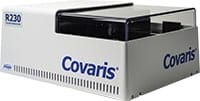
R230 Focused-ultrasonicator
This unique, high-throughput Focused-ultrasonicator has a compact design for use on the bench or integrated on the deck of a liquid handler.
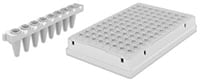
AFA-TUBE® Plates and Strips
Specially designed, laser etched polymer vessels enabling a single-tube workflow with no transfer steps for high-throughput workflows.