

Improving Whole Exome Sequencing Library Prep from Low Input and Degraded FFPE Samples Using Covaris AFA Technology
In a recent webinar, Nripesh Prasad, Ph.D., VP, Scientific & Technical Development, Discovery Life Sciences, shared results from a study comparing extraction methods as well as mechanical shearing versus enzymatic fragmentation methods for library preparation. The findings revealed that the extraction protocol using Covaris’ acoustic technology consistently resulted in higher DV 200 quality metrics of extracted analytes, while mechanical shearing with Covaris resulted in more consistent insert sizes and higher quality libraries than enzymatic shearing, especially with low DNA input from FFPE samples. Despite the lower upfront costs of enzymatic shearing, its higher error rates suggested that mechanical shearing is more effective and outperforms enzymatic shearing, particularly for degraded samples and limited DNA material.
Introduction
Formalin-fixed paraffin-embedded (FFPE) methods have long been utilized to preserve clinical samples at low cost. With an estimated one billion samples archived globally, FFPE collections are by far the most extensive collection of clinical material available.
However, there are challenges when using FFPE samples: the crosslinking and subsequent de-crosslinking of DNA and RNA within these samples can hinder the ability to generate consistent and reliable genomic data, posing a barrier to research applications that rely on high-quality genetic material.
This raises the question: is the RNA degraded in the FFPE block of tissue or is it the way we are extracting it that causes degradation? Results from Discovery Life Sciences (DLS) indicate that extraction methodology does play an important role in FFPE samples and the use of Covaris’ Adaptive Focused Acoustics® (AFA®) technology resulted in superior quality analytes. Figure 1 shows that in DLS’s optimized protocol, 100% of the samples tested had a DV 200 of 20% or higher, compared to the standard competitor protocol in which only 20% of samples had a DV 200 of 20% or higher.
Using Covaris AFA technology provides several advantages, such as lower failure rates, flexibility, and ease of integration. DLS utilizes this technology for all of its FFPE extractions (which include single DNA and RNA, as well as dual extractions). Since 2016, DLS has extracted close to 750,000 FFPE samples, resulting in high-quality data and exceptionally low failure rates across all collections, samples, and tissue types.
 Figure 1. Dual RNA/DNA extraction vs. standard methods.
Covaris AFA Technology Enables Consistent High-Quality DNA and RNA Extraction from FFPE Samples
DLS utilized Covaris’ AFA in their extraction of DNA and RNA from the same FFPE sample to deliver consistent, high-quality nucleic acids. By moving from a standard column-based protocol to a more robust acoustic technology, there was no loss in quality or quantity of RNA and DNA. Additionally, this technique facilitated the extraction of longer RNA inserts from archived FFPE samples, enhancing the overall integrity and utility of the genetic material extracted. The success in obtaining superior results stems from the use of AFA for both extraction and DNA shearing, a practice that DLS employs for every FFPE sample that is processed.
Robust DNA and RNA Yields from Resection and Core Needle Biopsy Techniques
When examining the sources of clinical trial samples, a crucial aspect is determining whether they come from resection or core needle biopsies (CNB). The extraction technique utilized by DLS, which has been analytically validated in their labs, leverages Covaris AFA technology to lyse FFPE samples from both resection and CNB. It consistently yields higher amounts of RNA than DNA from the same tissue types, which aligns with expectations given RNA’s dynamic nature. The yield of RNA and DNA varies among different tissue types, a variation that correlates with the cellular density or cellularity per millimeter squared. For example, endometrial and ovarian tumors, which are highly cellular, provide substantial amounts of DNA and RNA compared to less cellular types like lung or gastric cancers. DLS’s findings demonstrated robust DNA and RNA yields from both resection and core needle biopsy techniques. The crucial insight here is the measurement of DNA and RNA yields relative to the surface area of the sample processed for extraction, with both resection and core needle biopsy samples yielding high nanogram per millimeter squared values, as shown in Figure 2.
 Figure 2. Average DNA and RNA yield from FFPE resection and CNB samples.
Mechanical Shearing vs. Enzymatic Fragmentation Techniques
Following the extraction process, gDNA fragmentation is the most critical step in any DNA library prep method. Several methods are available and broadly classified into either mechanical or enzymatic categories. One of the most prevalent mechanical shearing techniques is acoustic shearing done by Covaris, where sound waves are used to induce cavitation in samples which mechanically fragments the DNA. Enzymatic fragmentation cleaves the DNA at different points depending on the chosen enzymes. To optimize workflows, the benefits and drawbacks of each method must be considered (Table 1).
 Table 1. Pros and cons between mechanical and enzymatic shearing.
Covaris’ focused acoustic shearing methodology is the gold standard in the industry for genomic DNA fragmentation. It is versatile and capable of handling a wide range of input materials, volumes, and genetic complexities, including variations in GC content. While this study noted scalability and sample transfers as weak points of mechanical shearing, it was also noted that Covaris has solved this issue with its R230 Focused-ultrasonicator, which can be integrated directly on deck of a liquid handler for high-throughput, hands-free processing (Figure 3).
 Figure 3. Covaris solves scalability and sample transfer concerns with the flexible, automation-friendly R230 Focused-ultrasonicator, which was not utilized in this study.
In contrast, enzymatic fragmentation stands out for its lower initial investment, scalability to a certain extent, adaptable reaction volumes, and simplicity in setup. However, evaluating the overall performance of each technology is crucial for determining its value.
Seamless Integration of Acoustic Technology into Workflow
DLS incorporated acoustic technology into its workflow and performed a comparative experiment between the Covaris versus enzymatic fragmentation methods. The objective was to directly compare the performance of these two technologies on the same sample types, using high-quality and degraded DNA.
 Figure 4. Covaris vs. enzymatic fragmentation testing.
DLS conducted tests across a range of FFPE sample inputs, from 200 ng down to 10 ng, each performed in triplicate, alongside N2 platinum genome samples (Figure 4). They utilized different gDNA shearing technologies for this purpose: mechanical shearing was achieved with the Covaris LE220Rsc Focused-ultrasonicator, while for enzymatic shearing, they opted for NEB’s solution.
The team looked at a few key clinical sequencing metrics including what was the q30, what was the insert size, and what was the discordant percent.
The sequencing quality control (QC) results showed that the samples prepared using Covaris and enzymatic shearing techniques yielded comparably high-quality sequences (Figure 5).
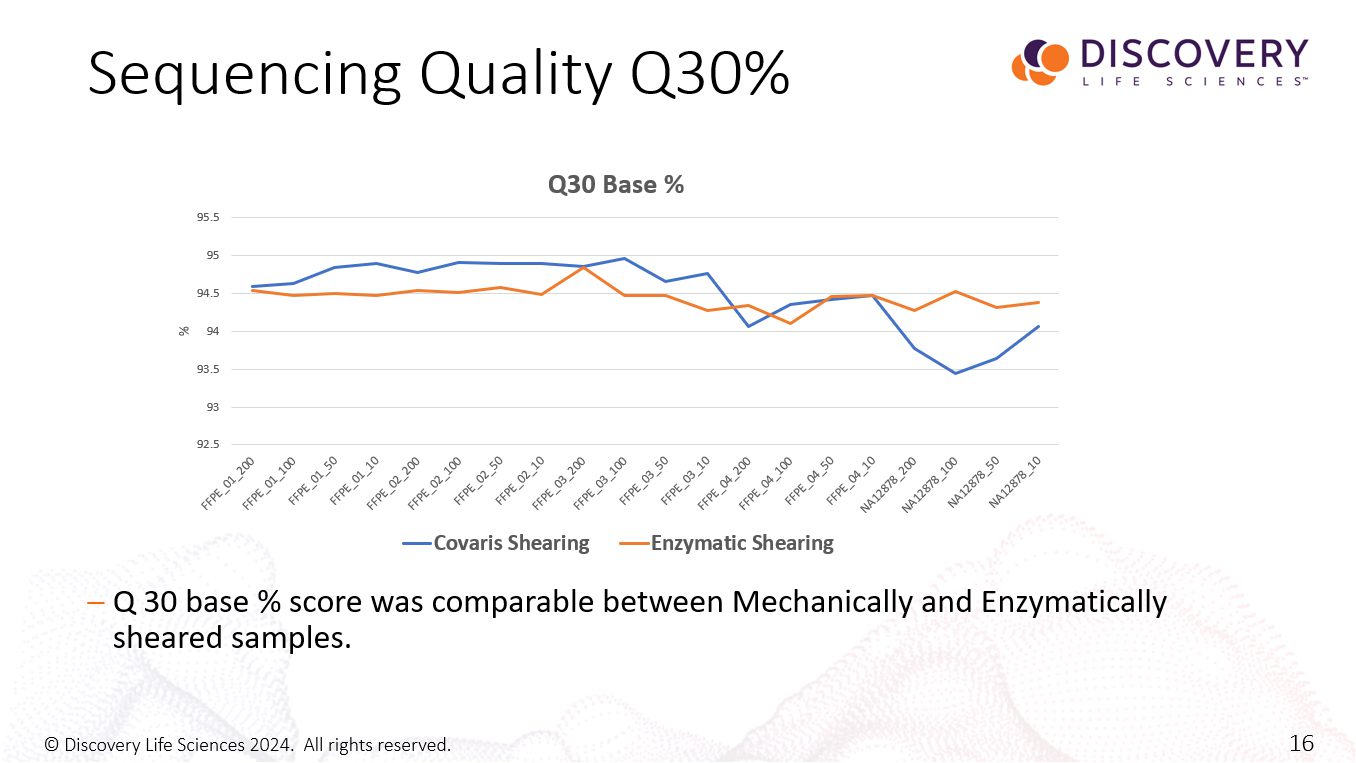 Figure 5. Q30 base % score was comparable between Covaris and enzymatically sheared samples.
Moreover, it was observed that the library insert size was higher across different FFPE samples for the Covaris shearing method as compared to the enzymatic shearing. This finding is critical for evaluating downstream metrics.
Notably, in the case of the NA12878 samples, Covaris shearing demonstrated significantly more precise control over the shearing process, allowing for the consistent target of larger insert sizes relative to those obtained through enzymatic fragmentation (Figure 6).
 Figure 6. Library insert size was higher for libraries prepared using Covaris shearing compared to enzymatic shearing.
In addition, mean target coverage remained similar for both enzymatic and mechanical shearing (Figure 7).
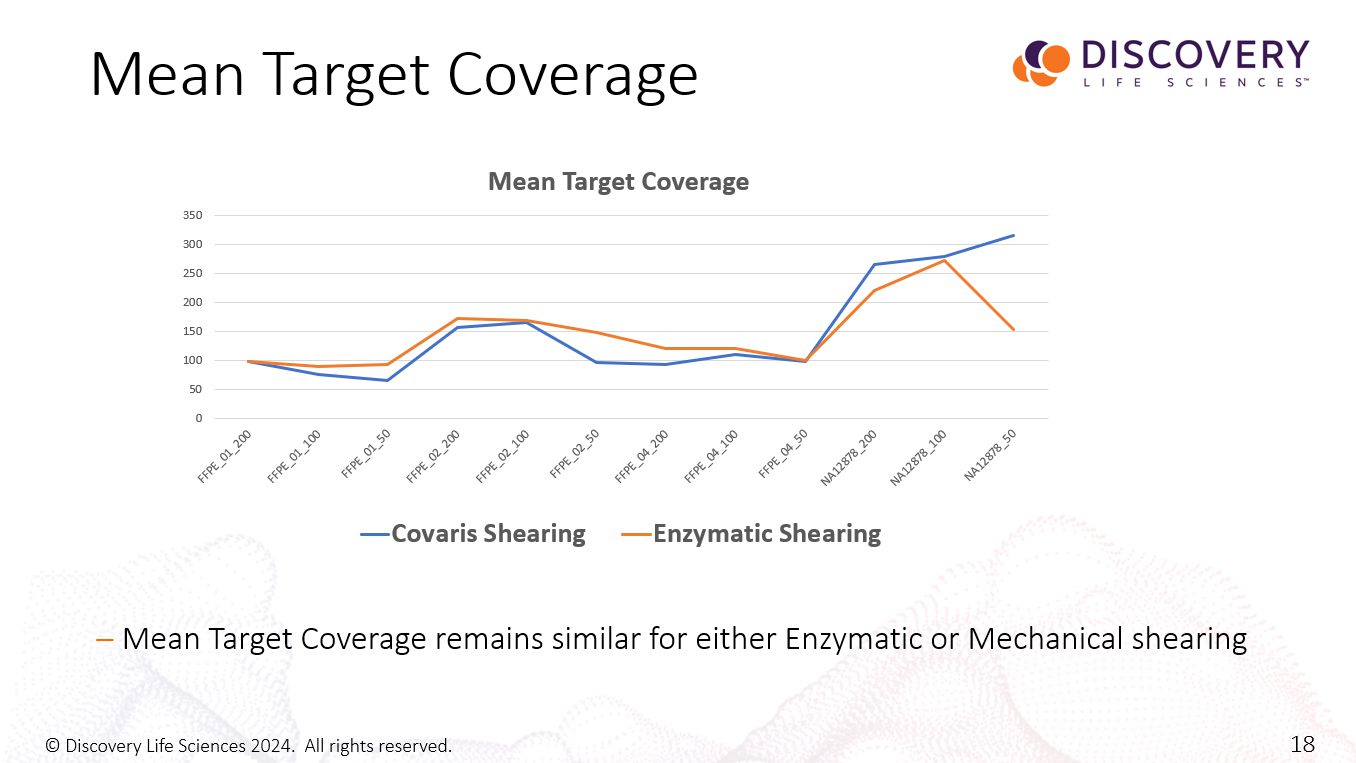 Figure 7. Mean target coverage remains similar for enzymatic and mechanical shearing.
Analysis found that the discordant rate, apart from Q30 being very close to each other and the sequencing quality being close to each other, displayed a preference for mechanical shearing over enzymatic shearing (Figure 8).

Figure 8. Discordant rate.
Upon examining the accuracy and precision of the NA12878 samples with various inputs for both shearing methods, it was found that both enzymatic and Covaris shearing deliver highly accurate and precise results for these samples (Table 2). However, samples sheared with the Covaris method consistently maintained a low discordant rate compared to enzymatic fragmentation. As the input amount was reduced from 200 ng to 10 ng of FFPE samples, the discordant rates increased. However, when using Covaris AFA technology, it stayed very stable and consistent across the board (Figure 9).
 Table 2. High accuracy and precision were achieved with NA12878 compared to the platinum genome.

Figure 9. Discordant % as function of DNA input from shearing method utilized.
Conclusion
Studies have revealed that AFA technology has many benefits for extraction and shearing of DNA and RNA from FFPE samples.
In nucleic acid extraction, an AFA-based protocol consistently results in higher quality analytes, with much higher DV 200 metrics compared to competitor protocols. By facilitating the extraction of longer RNA inserts from archived FFPE samples, AFA enhances the overall integrity and utility of the genetic material extracted.
Additionally, the Covaris shearing approach results in both larger and more uniform library insert sizes compared to those achieved through enzymatic fragmentation, with this consistency evident across a wide array of sample types, numerous projects, and internal trials. The benefits of utilizing Covaris AFA technology include decreased rates of failure, streamlined testing, minimal downtime, enhanced flexibility, and the ease of incorporating it into different workflows.
One notable benefit is its capacity to adapt to different DNA sources and extraction materials without necessitating adjustments to protocols. While both methods display similar Q30 base quality, it is important to highlight the increased rates of discordance associated with enzymatic shearing in both FFPE and NA12878 samples. This discrepancy could potentially compromise the precision of variant detection, especially in clinical contexts involving highly fragmented and degraded FFPE samples.
The observed increase in discordant rates, ranging from 5% to around 15%, underscores the potential challenges in achieving reliable genotyping calls due to technical artifacts and biases inherent in enzymatic fragmentation processes, especially with FFPE samples. These results strongly support the use of Covaris shearing, coupled with isolation and library preparation techniques for degraded and limited input materials from FFPE samples, as the most effective strategy for generating meaningful data across diverse clinical settings.
Interested in incorporating Covaris AFA technology in your workflow? Click here to contact our team of experts!